Divine Divinity (2002) - Surprisingly Effective First Steps
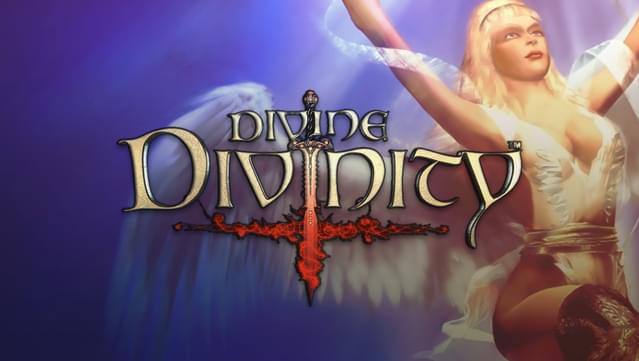
It is December 2025, and Larian Studios is currently top dog in the CRPG genre. Baldur's Gate 3, released only a scant couple years ago, has become the most successful game the genre has ever seen. All eyes in the space are on Larian and their newly announced return to their Divinity series, and their home setting of Rivellon. It's no surprise then that the (very recent) quotes Larian CEO Swen Vincke has given regarding Generative AI usage in game dev workflow have drawn such ire despite the fact that likely every major AAA studio is doing much the same if not more. Quite simply, there's just more eyes on Larian than nearly any kind of studio of it's kind. But that controversy isn't the topic here (although it is still an important topic). The topic here is that aforementioned return to Divinity. Divinity has always been a bit of a blindspot for me in the CRPG space, a fact I'm a little ashamed of considering my love for the genre. I adored BG3, but only ever played some 40 minutes of Original Sin 2. So fresh off that reveal of the new game (pre-controversy again!) my love for greater context in these series led me to start at the beginning of what would eventually become one of the most confusingly named game series ever; Divine Divinity.
The issues with naming start immediately. Quite frankly Divine Divinity is a pretty shitty title. Considering they were forced to change it from the original title Divinity: The Sword of Lies by their publisher, I doubt most of the devs at the time would even disagree with that. This will lead to an absolute nightmare of game titles: Divine Divinity, Beyond Divinity, Divinity II, Divinity: Dragon Commander, Divinity: Original Sin, Divinity: Original Sin 2, and now simply Divinity. To this day I see people confused that Divinity: Original Sin 2 and Divinity II are in fact different games, with many people even just referring to DOS2 as Divinity 2. But for now, names aside, Divine Divinity is the beginning of Larian's RPG series.
Released back in 2002, it serves as an interesting time-capsule of that weird transitory state RPGs found themselves in at the time. Barely removed from the peak of the Infinity Engine games, and not far at all from Knights of the Old Republic which would alter the course of the medium forever. In this time CRPGs were beginning to start to include games that increasingly no longer looked like the blueprints laid out prior and perfected by Baldur's Gate. Gothic and Morrowind were pushing out from this mold, and Neverwinter Nights was experimenting with the formula in really unique ways for the time. Among these games however, were still some that stuck with that tried-and true format. The incredible Baldur's Gate II was released only two years prior, and the cult favorite Arcanum a year after that. Divine Divinity is not remembered like those games however. Nor is it even remembered alongside games like Icewind Dale II and Temple of Elemental Evil. It exists in the same memory hole as games like Lionheart, which would release only a year later. Without the later success of Larian and the Divinity Series, it might have stayed there too. So it was with some trepidation I launched the game for the first time, after an annoying series of just getting the damn thing to work well.
Luckily, Divine Divinity kinda rocks.
The emphasis does sit squarely on the word "kinda" however. This is a game that doesn't really massively excel at anything (except for one thing, I'll get to that) but rather throws enough in fun ways that the game just ends up being a damn good game for most of its runtime. Divine Divinity plays like a blend of Diablo and the first Baldur's Gate game. An interesting blend of open-ended areas with tons of side content, character building decisions, large scale dungeons, and tons of randomly statted loot. A blend that is basically commonplace today across the genre of action RPGs. Now, Divine Divinity is not the source of this by any means. Games like Icewind Dale and even Diablo II itself had been experimenting with these things already by this point. If anything it's just another interesting time-capsule of the genre. The blend has definitely been done better other places, but even here its a potent one. It doesn't control as smoothly as Diablo itself of course, and it can rely a bit on the included pause feature to alleviate some of the annoyances of control. Dungeon level design is similar to Diablo but less refined and with a ton of copy-paste tile-sets as the game progresses. Exterior exploration on the other hand, is the highlight here gameplay wise.
For many years images have floated around, stitching together all of the outdoor areas of Baldur's Gate to form a surprisingly contiguous world, stretching from the Nashkel Mines all the way up to Baldur's Gate itself. There's definitely some areas that don't perfectly line up, and especially up near the city itself the scale starts to break down. But as later CRPGs focused on denser, disconnected locations (see Baldur's Gate II, and even Pillars of Eternity for a modern example) a question remained floating around the genre; what would it be like to explore a world that felt like those continuous maps of Baldur's Gate? Divine Divinity is the answer. The first major zone of Ferol is by far my favorite part of the whole game and honestly deeply impressive. A massive area that took hours and hours to explore fully, with tons of fun encounters, evocative and atmospheric locations, memorable quests, and some absolutely stellar music. I was utterly shocked when I left the starting town, ready to begin my adventure, only to for the first time really look at the scale of the world map, and how small the starting town of Aleroth is in actuality. There's so much to explore and see, and so much of it was really engaging. Verdistis and The Dark Forest comprise the other two primary zones, and aren't as impressive or engaging, but are still comprised of a lot of good content. The final area however is kind of a let down, featuring vast wilderness with basically nothing of note. In fact the whole last act of the game feels really rushed and bare bones, which is a real shame. I had been enjoying it a great deal up to that point, but I found myself rushing to the end to get the last bit over with compared to earlier areas.
I focus so much on the exploration because that's really what set this game apart gameplay wise. If you have ever played the early Diablo games you pretty much know what you're getting here, and it doesn't do much beyond that. The setting itself is extremely nascent here as well. There's a couple unique ideas but for the most part if you've engaged with fantasy media at all since Tolkein, you pretty much won't be shocked by anything you come across here, tonally or visually. The story too follows the most rote "Chosen One" path you'll ever really come across. In Barry Brenesal's review for IGN, he made the statement that Divine Divinity "lacks anything memorable" but that it remained "a very easy game to get into and enjoy." I would maybe push back on the harshness of saying it lacked *anything* memorable, but the sentiment rings mostly true. This is not a game that will blow you away in its story like Planescape, or its setting like classic Fallout, or the quality of content of Baldur's Gate II, or the endless dopamine grind of Diablo and Diablo II. What it is however, is a game that creates a mostly tight-knit experience that remains fun, and holds enough of its own off-kilter humor and artistic voice to make it feel like its own thing, and not just another clone of everything else you've likely played and seen before. The main reason I push back on saying the game holds nothing memorable however, is that it does one specific thing absolutely incredibly.
If I take nothing else from this game, I will take away the knowledge that Kirill Vladimirovich Pokrovsky is a fucking genius. I alluded to one thing that Divine Divinity absolutely excels in and its far and away the music. In a genre of fantasy predominantly dominated by sweeping orchestral pieces, Divine Divinity's OST is so incredibly unique. A vast array of different instruments, styles, vibes, and all of them are absolutely excellent. From the Diablo-like acoustic guiter-led soundscapes of Ferol, to the gorgeous choral pieces in the elven forest, to the fucking electric guitar riffs and percussion in the desert backing tracks. Make no mistake, this game would be far worse without its soundtrack. Pokrovsky would go on to make the soundtracks for the rest of the Divinity series, until his tragic death in 2015. After hearing this soundtrack, I can absolutely see why, its so distinctive that it becomes as much a part of the games identity as any piece of text or moment of gameplay. It's truly excellent and simply makes the atmosphere of this game.
There sadly exists one more massive caveat with Divine Divinity and that is how much of a technical mess this game can be sometimes. Now of course there’s the natural issues with trying to play an old game and those are all here. I don’t feel fair complaining about things the game could have no way to account for though. The real issue is that even beyond that, and even at the time, the game just has some real technical issues that can hinder it. Crashes are common, random exceptions and infinite loops, and various other issues that can end a session right then and there. Most famously, perhaps as a result of the non-linearity of the game and a rushed development time, there exist many quest flags that will either not work quite right, break if you do them in a “wrong order” or complete properly but not give you any of the rewards from it due to you again, doing them in an “improper order.” This leads to two options: either accept that you will be arbitrarily locked out of a fair bit of content or rewards without really knowing why, or follow along with one of the excellent guides to avoiding quest breaks in the first place. I am glad I picked the second option, but it can be really distracting having to keep following some list of when and when not to do certain quests, and can hamper that great feeling of exploration the game has. Combined with the rushed final act it really feels like this game could have just used a little more time to clean up some of these issues. And you know. Finish the last act.
OK maybe it could have used more than a little.
I find a studio's early games like this pretty interesting. Sometimes they just knock it out of the park like BioWare with Baldur’s Gate. Sometimes a studio's earliest games just honestly aren’t very good. Divine Divinity is one that fits much more in the middle. It stays a pretty fun game, but not overly unique. What’s most interesting is being able to start seeing the design principles that would shape their later games into the “Larian style” we have now in titles like Baldur’s Gate 3. Massive environments filled with fun moments and encounters, a free-form style of play focused around player expression, and an absurdist sense of humor that always lets the player know the game itself is VERY much in on the joke. It even has movable boxes and rocks! This game was a pleasant surprise to say the least, and its honestly a shame how under-looked it is. Give it a shot if you enjoy CRPGs, ARPGs, or are just as interested as I was about the origins of Divinity.

YEAHHHHH
ReplyDeletethis is the greatest blog of all time